
Thematic objectives
Find detailed information about the thematic objectives of Interreg

What are the Interreg themes?
Turning Cohesion Policy into action
Interreg focuses on seven thematic objectives during the 2021-2027 period. These objectives are part of the EU regulation and reflect Interreg's mission to build a more united, inclusive and resilient Europe by promoting cooperation and addressing shared challenges. The seven objectives include five EU policy objectives and two Interreg-specific objectives.
Each thematic objective addresses a key area. Below, you can explore a brief description of each theme and learn how they contribute to both EU policy priorities and Interreg's broader mission.

A Smarter Europe
Interreg drives innovation, competitiveness, digitalisation, and smart specialisation across regions. It supports research, technology, and entrepreneurship to build strong, future-ready economies.
A greener Europe
Interreg invests in projects that promote a low-carbon economy, tackle climate change, and encourage a circular economy. It supports risk prevention, nature protection, sustainable energy, and water management to help build a greener, more sustainable future.
A more connected Europe
Interreg focuses on improving mobility by enhancing transport networks and digital infrastructure. This ensures better connections for people, goods, and information across regions.
A more social Europe
Interreg promotes inclusion, employment, and access to quality health, education, training, and skills. It also supports culture, sustainable tourism, and equality to create a fairer, more inclusive society.
Europe for citizens
Interreg adopts place-based and community-based approaches to support integrated territorial strategies. It prioritises local ownership and sustainable partnerships to address the unique needs of regions and communities.
Better governance
Interreg strengthens institutional capacity and encourages cross-border collaboration. It addresses legal and administrative obstacles, promotes mutual trust, and helps build more transparent, inclusive, and sustainable democratic governance.
A safer Europe
Interreg supports better border management and migration processes. It helps enhance the social and economic integration of migrants and third-country nationals, creating more inclusive communities and fostering secure and efficient border operations.
Latest news and stories
Discover how Interreg brings its thematic objectives to life through real-world projects and success stories. Learn how collaboration across borders is driving positive change and making a tangible impact on communities across Europe.
Faces of Interreg: Nathalie Verschelde on managing a unit at the European Commission
Nathalie Verschelde, Head of Unit for REGIO D.2, shares that she would liked to be recognised for her persistent crusade in favour of border regions, with Interreg as one of the most important tools.
02 October 2026
Industrial transition: practical support tools for SMEs
Small and medium-sized enterprises must increasingly adapt to new market conditions and regulatory requirements, from circular production to digital product traceability. Interreg cooperation projects are testing practical support schemes such as innovation vouchers, cooperation with research infrastructure, reuse audits and Digital Product Passport readiness tools.
09 September 2026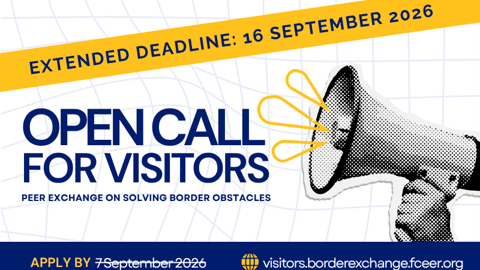
Border Regions Peer Exchange: deadline extended to 16 September
Apply by 16 September to take part in peer exchanges on practical solutions to cross-border obstacles
08 September 2026
Faces of Interreg: Pilar Maza on leading an Interreg programme
Pilar Maza, Head of the POCTEFA Joint Secretariat, explains that one of the most challenging aspects of her job is planning within a multicultural and multi-tasking environment.
04 September 2026