

Breaking the ghost fishing cycle in the Black Sea
To tackle this cross-border challenge, the BlackNETs project, funded by the Interreg NEXT Black Sea Basin Programme, brought together scientists, fishermen and public authorities from Romania, Bulgaria, Türkiye and Georgia. Their mission? To locate, remove and prevent the accumulation of ghost nets, helping to protect the Black Sea's fragile ecosystems and restore marine biodiversity.
A circle of devastation that can continue for decades
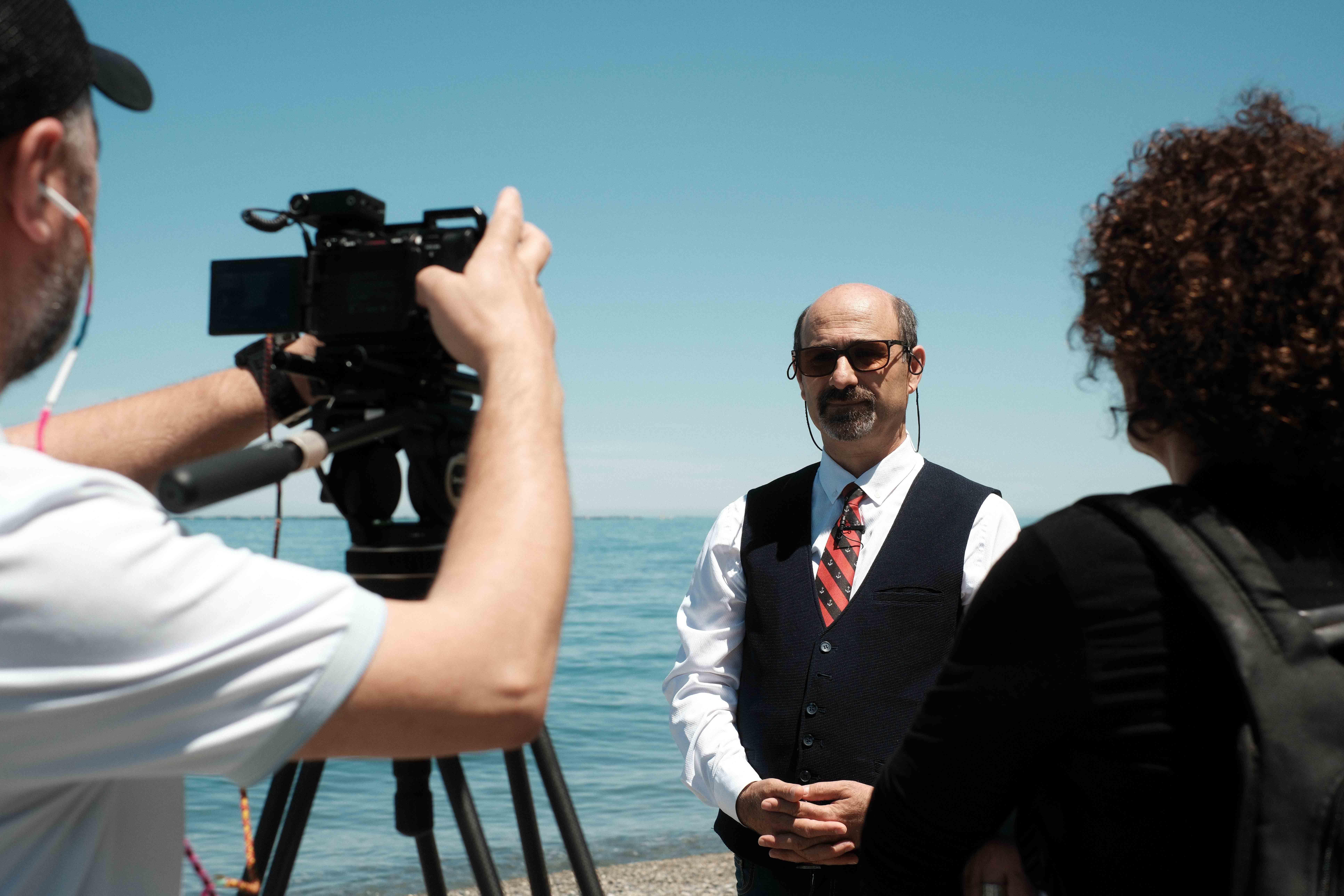
'The Black Sea receives pollution from many different sources', explains Coşkun Erüz, marine scientist at the Karadeniz Technical University (KTU) in Türkiye and coordinator of the BlackNETs project. 'The litter is coming from cities, industries, agriculture and maritime activities. We focused on ghost nets because fishing is particularly intense in some areas. Through this project we wanted to understand the scale of the problem, and find solutions together with the fishermen'.
Local communities are at the centre of the challenge, as nets are essential tools for fishermen. 'The problem is that after being lost at sea, nets can become deadly traps. Dolphins, whales, sturgeons, and also crabs, turtles and other species die, and are not even used as food', says Fatma Telli Karakoç, co-coordinator of the project. 'Moreover, the nets cover the seabed and affect the entire food chain'. Dragged by currents, ghost nets can damage seagrass meadows, rocky reefs and coral communities. These habitats are the nursery grounds for all sorts of marine organisms, and when they are degraded, many species lose shelter and food. It’s a circle of devastation that can continue for decades. In fact the danger comes (also) from the material itself. 'Plastic does not disappear easily - continues Fatma - nets can remain in the sea for more than 100 years. As they degrade, they release microplastics that are ingested by plankton, shellfish and small fish. These particles then move up the food chain to larger fish, marine mammals and seabirds, and can eventually reach us, through seafood'. So, left untouched, ghost nets can continue harming marine life for years and years: removing them was - and remains - a priority. The first challenge, however, was: how to find them?

Finding the hidden graveyards of fishing nets
The BlackNETs team began by collecting knowledge from those who know the sea best. Ninety fishermen from Bulgaria, Georgia, Romania and Türkiye answered detailed surveys about where nets were lost, and most likely to accumulate. The results revealed the scale of the problem: 79% of respondents considered ghost nets a moderate or serious problem in their area; 88% said their ports had no facilities for collecting discarded fishing gear; strong currents, bad weather and gear entanglement were identified as the main causes of net loss. At the same time, fishermen showed a strong willingness to be part of the solution: 92% said they would participate in fishing for litter initiatives if the right support systems were available.
Using the information collected, researchers created maps showing where nets were most likely to accumulate. These areas became known as hot spots. 'These are places where currents, rocky seabed and weather conditions combine to trap nets year after year”, continues Coşkun. In 2024, divers and researchers went underwater to verify these locations, identify the type of fishing gear involved, and begin removal operations.
Removing ghost nets is far from simple. A single abandoned net can weigh hundreds of kilograms. Some are so large and tangled that divers cannot simply pull them out: they must cut them underwater into smaller pieces, or use heavy equipment to lift them up. In Georgia, divers discovered a trawl net almost 30 metres long, weighing close to two tonnes.
The project set an ambitious goal: to remove at least 8,000 kilograms of abandoned fishing gear from Black Sea waters. A few months ago, when activities came to an end, the result went beyond expectations: almost 10 tonnes of lost and discarded equipment had been recovered. But cleaning the sea was only one part of the solution. The project also looked beneath the surface to understand why fishing gear ends up in the sea, and - most importantly - how to prevent this from happening again.
Listening to fishermen: a problem without simple blame
Stopping ghost nets at the source means also understanding the reality of those who work at sea every day. Many small-scale fishermen feel that they are unfairly blamed for a problem that can also involve larger industrial fishing operations.
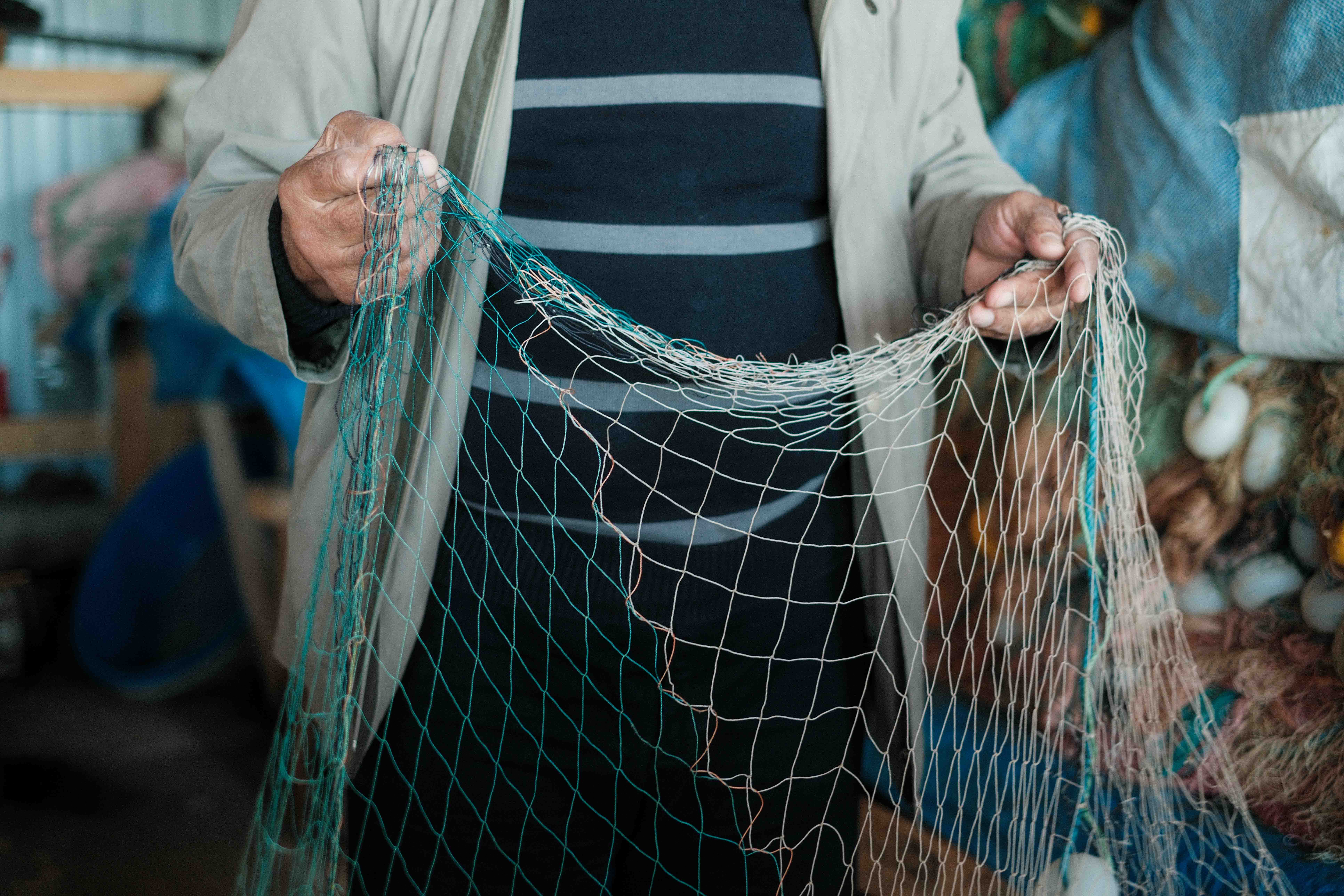
The Turkish fisherman Muzaffer Demircioglu, from Trabzon, is willing to explain: 'It is not that fishermen leave nets behind on purpose. Losing a net is not something that happens easily. Often, larger boats pull their nets over ours. Since our nets are fixed in one place, their equipment can catch them and tear them apart. So when they pull their nets back, parts of ours remain in the sea'. Over time, the fisherman explains, abandoned nets gradually blend into the seabed. 'The nets get covered by small marine organisms. The mesh becomes blocked and the holes close. Eventually, they become like a piece of stone lying on the bottom of the sea'.
But if it’s true that ghost nets become encrusted with marine sediments - making them more difficult to detect - they do not become harmless, like a rock. Even when heavily colonised by marine organisms, they can continue to damage seabed habitats, to trap marine life. And to slowly release their plastic fragments. Muzaffer’s words, however, highlight a different key point: ghost nets are not simply a waste issue. They are the result of complex interactions between different fishing practices and actors, equipment, weather conditions and the lack of adequate collection systems.
As the project kept going, it became obvious that removing lost fishing equipment was just the third step of a much more global effort.

Changing the future starts with children
One word sums it all up: awareness.
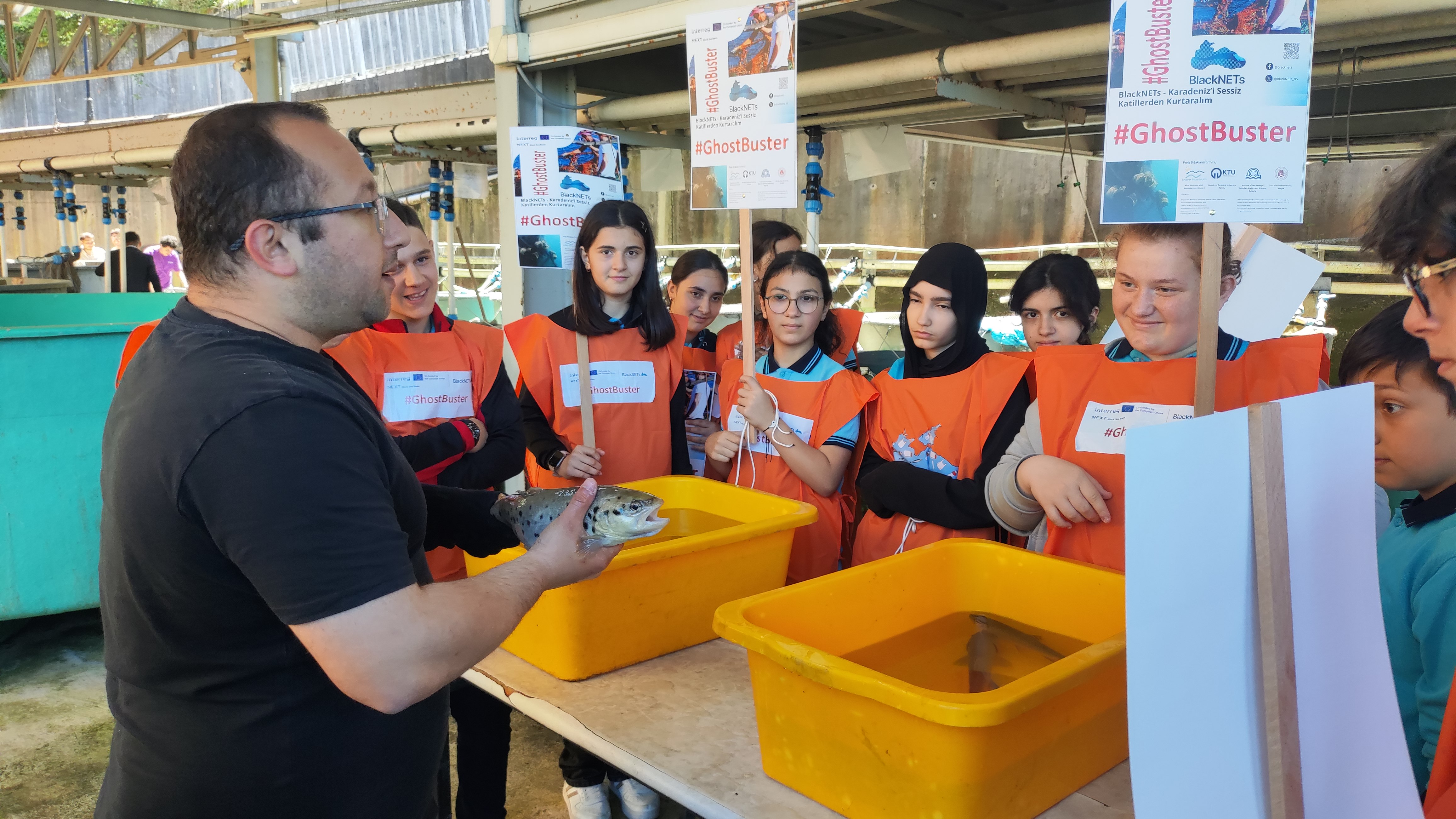
Convinced that prevention starts with education, the project partners worked to instil environmental responsibility in younger generations. Through the #Ghostbusters campaign, more than 60 interactive workshops were organised in schools across the four countries, reaching around 2 500 students and teachers. Children learned about marine ecosystems, plastic pollution and the importance of protecting the sea they live next to. 'Children living in coastal areas have a special relationship with the sea - continues Coşkun - If they learn to protect and value the environment from an early age, this knowledge stays with them. Many of their relatives are fishermen, so they can also bring this lesson back home'.
The students clearly understood the message. During an awareness-raising event held last May at the KTU Marine Science Faculty in Trabzon, one young participant explained: 'The ghost nets that are thrown away pollute the seas, destroy animal diversity and take away their habitats and lives'.
Others took the reflection a step further, linking the problem to everyday practices. 'Our fathers and uncles, they do fish with nets - another student observed - They should be more cautious when using them. They should not leave nets in the sea, and should retrieve them carefully'.
Some were already looking ahead, proposing practical solutions of their own. 'We could collect ghost nets, recycle them and use the plastic to make new things', suggested one child.
The project's awareness campaign extended well beyond the classroom. An exhibition at the Natural Sciences Museum Complex in Constanța, Romania, attracted more than 17 000 visitors, bringing the issue of ghost nets to an even wider audience.

A shared sea needs shared responsibility
But increasing knowledge - even among large audiences - is also not enough. Turning awareness into lasting impact requires something more. And here is the added value of cross-border cooperation. The BlackNETs project brought together universities, environmental organisations and public authorities from Bulgaria, Romania, Türkiye and Ukraine, demonstrating that protecting the Black Sea is a shared responsibility that no country can carry alone.
By combining scientific expertise and practical experience, the partners developed solutions for a problem that ignores national borders. For Ayşegül Hacisalihoğlu, representative of the Turkish National Authority, this spirit of cooperation is one of the project's greatest achievements. 'We need to solve these problems together - she says - the cooperation between partners has been very strong, and everyone is committed to continuing this work beyond the project's lifetime.'
BlackNETs also sought to turn practical experience into policy impact. By sharing its findings with public authorities and regional organisations, partners helped ensure that the gained knowledge could support wider environmental strategies, including the objectives of the Common Maritime Agenda, and the Black Sea Commission.
The lesson from the project is clear: protecting the Black Sea requires more than removing abandoned nets. It needs cooperation between scientists and fishermen, awareness among communities, long-term solutions to prevent pollution before it reaches the sea, and a coordinated approach.
Because beneath the surface, every lost net tells the same story: what disappears from sight, does not disappear from nature. And it is high time to look beneath the surface and understand what is happening all around us.
Header photo: Net recovery operation in Trabzon area © Rafet Çağrı Öztürk, BlackNETS project.