

Building a shared emergency care system across the EU–Ukraine border
To respond, hospitals in Ukraine, Hungary and Slovakia are working together through two Interreg NEXT projects to build a shared emergency care system across the EU–Ukraine border. The partnership aims to improve diagnostics, speed up treatment and strengthen cooperation between medical teams on both sides of the border.
Since the start of the war, reinforcing healthcare systems along the border between the EU and Ukraine has become increasingly urgent. In Uzhhorod, a Ukranian city that counted around 120 000 residents before 2022, the pressure on medical services has risen dramatically. In just four years, the number of people relying on the city hospital has nearly doubled, as refugees, displaced families and wounded patients have moved westward in search of safety and medical treatment. Last year alone, the trauma department of this relatively small facility carried out 1 600 surgeries. But when doctors and hospitals become overwhelmed, several things happen at once: waiting times increase, even for serious conditions; resources like beds or operating rooms run short; less urgent treatments are delayed, or even cancelled; and the risk of complication rises, as an overloaded system makes it harder to monitor patients, and intervene quickly.
In such a context, cross-border cooperation is playing a key role in improving resilience and access to quality care. Two EU-funded projects - under the Interreg NEXT Hungary–Slovakia–Romania–Ukraine Programme - are helping hospitals in Ukraine, Hungary and Slovakia strengthen trauma care and diagnostic services to face this unprecedented burden. The projects connect three healthcare facilities located less than 50 kilometres apart along the borders: the Clinical Hospital in Uzhhorod (Ukraine), the St. Damján Görögkatolikus Kórház in Kisvárda (Hungary), and the Polyclinic Hospital in Kráľovský Chlmec (Slovakia). Together, they are building a stronger healthcare network in a region facing a growing medical demand driven by the consequences of war.
Changing the way care is delivered across the region
Under the TRAUMAHUA project the Clinical Hospital in Uzhhorod is getting a real upgrade, with new medical equipment and renovation works in its trauma and surgery departments. The goal is simple: to help the hospital react faster and better when emergencies come in. That includes not only wounded soldiers, but also the victims of serious road accidents along the busy E573 corridor. This short but strategically important road links Eastern Hungary with Western Ukraine, running through cities such as Debrecen, Záhony, Chop and Uzhhorod. The route is used not only by local commuters, but also by humanitarian convoys, freight transport, military-related logistics, and commercial traffic moving between Ukraine and EU markets. The whole region has been transformed into a major transit and logistic corridor, and that explains the higher number of accidents along the E573, with consequent pressure on health structures.
Before the war, the Uzhhorod hospital already had highly experienced staff, but modernising the equipment became essential to improve the way interventions are carried out, and to increase the number of patients the clinic could treat. The new electrosurgical devices acquired thanks to the TRAUMAHUA project are making a difference: they help doctors reduce bleeding during operations, cut tissues more precisely, quickly seal blood vessels, and shorten surgery time. Yulia Berlianuk is the project manager of TRAUMAHUA and HUSKUARADIO projects. She says: 'Today we can provide up to 15 trauma interventions per day. This wasn’t possible before'. But it’s not just about new machines, or renovated wards. The way care is delivered across the region is also changing. Medical teams from Ukraine, Hungary and Slovakia are working more closely together, developing shared treatment approaches and common protocols. 'If practices are aligned - continues Yulia - patients can receive comparable standards of care wherever they are treated within the network.'
The result is a system that feels more connected, where doctors can rely on shared experience and agreed guidelines when making quick decisions. With healthcare services under growing pressure, this way of working helps to reduce gaps between systems, and to speed up response times. Ultimately, this ensures better care for all patients, regardless of their passports.

The importance of new ultrasound technology
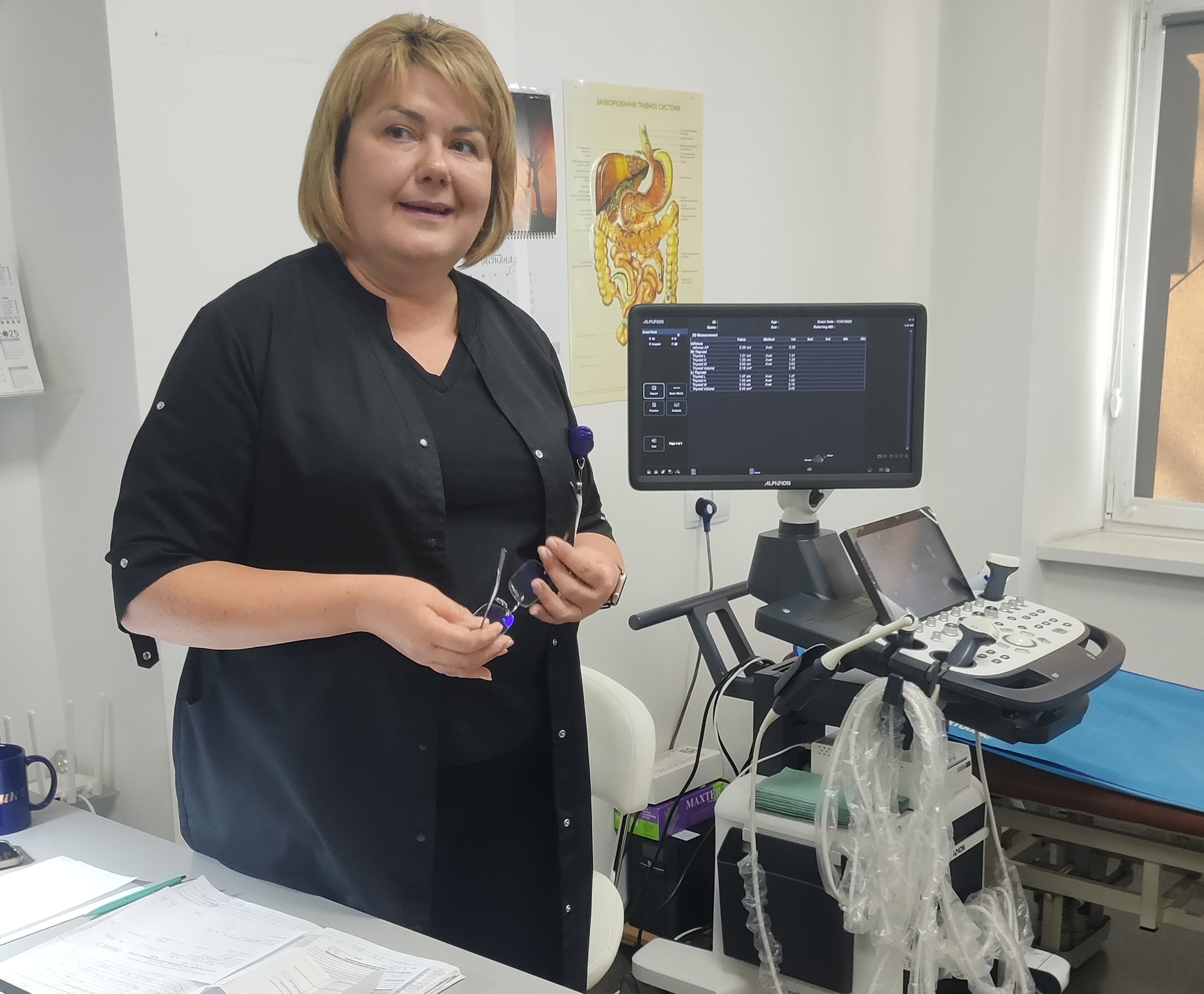
The HUSKUARADIO project complements these efforts. It does so by strengthening diagnostic capacity thanks to the introduction of new ultrasound technology in partner hospitals. The device delivered to Uzhhorod was manufactured in 2025 and is based on monocrystalline technology, one of the latest advances in the field.
Ultrasound imaging supports a wide range of diagnostic functions, from abdominal and vascular to cardiac and gynaecological examinations. It plays a key role in modern healthcare because it is fast, safe, non-invasive, and allows repeated use without risk for patients. 'What makes this device so important - explains Marina Frint, ultrasound specialist at the Uzhhorod Central City Clinical Hospital in western Ukraine - is that we can examine everything, from superficial structures to very deep tissues, with great precision, detecting very small anomalies that would have been much harder to identify before.' In emergency care, where time is critical, high-quality ultrasound equipment becomes even more valuable, allowing doctors to quickly detect internal bleeding, or organ damage. 'This means we can diagnose problems sooner and choose the right treatment faster - continues Marina - saving more lives.'
Beyond clinical performance, better equipment also helps ease pressure on medical staff. When hospitals are engulfed, healthcare workers are more exposed to fatigue and stress, which can affect concentration and decision-making. 'Every Friday we receive new soldiers from the frontline - says the Uzhhorod Clinical Hospital director Nataliia Hema-Bahyna - We are not a big hospital, but we have three operating rooms where surgeons work simultaneously, at full capacity, every day.'
Knowledge exchange to improve decisions
Beyond investments in infrastructure and equipment, both Interreg NEXT projects place strong emphasis on professional exchange and capacity building. Doctors and healthcare professionals from the three countries participate in joint trainings and workshops, learning how to operate the new machinery, sharing expertise, and comparing clinical practices.
This continuous exchange contributes to more informed medical decisions, and it helps the staff stay up to date with evolving techniques. 'It also strengthens long-term cooperation between health institutions - concludes Nataliia - which is essential when you are facing similar challenges.'
By upgrading facilities, introducing modern equipment and strengthening cooperation between doctors across Ukraine, Hungary and Slovakia, these projects are helping to build a stronger, more integrated healthcare network along the border. In a region where hospitals are under relentless strain, sharing knowledge and resources has become critical. The goal is to reduce the risk of collapse of the system, but also to ensure that patients continue to receive care when they need it most.
Header photo: Vasyl Voronich, head of the surgery department at Uzhhorod Central City Clinical Hospital. Photo: V. Prokharava.