

How Interreg helps businesses innovate across the France-Belgium border
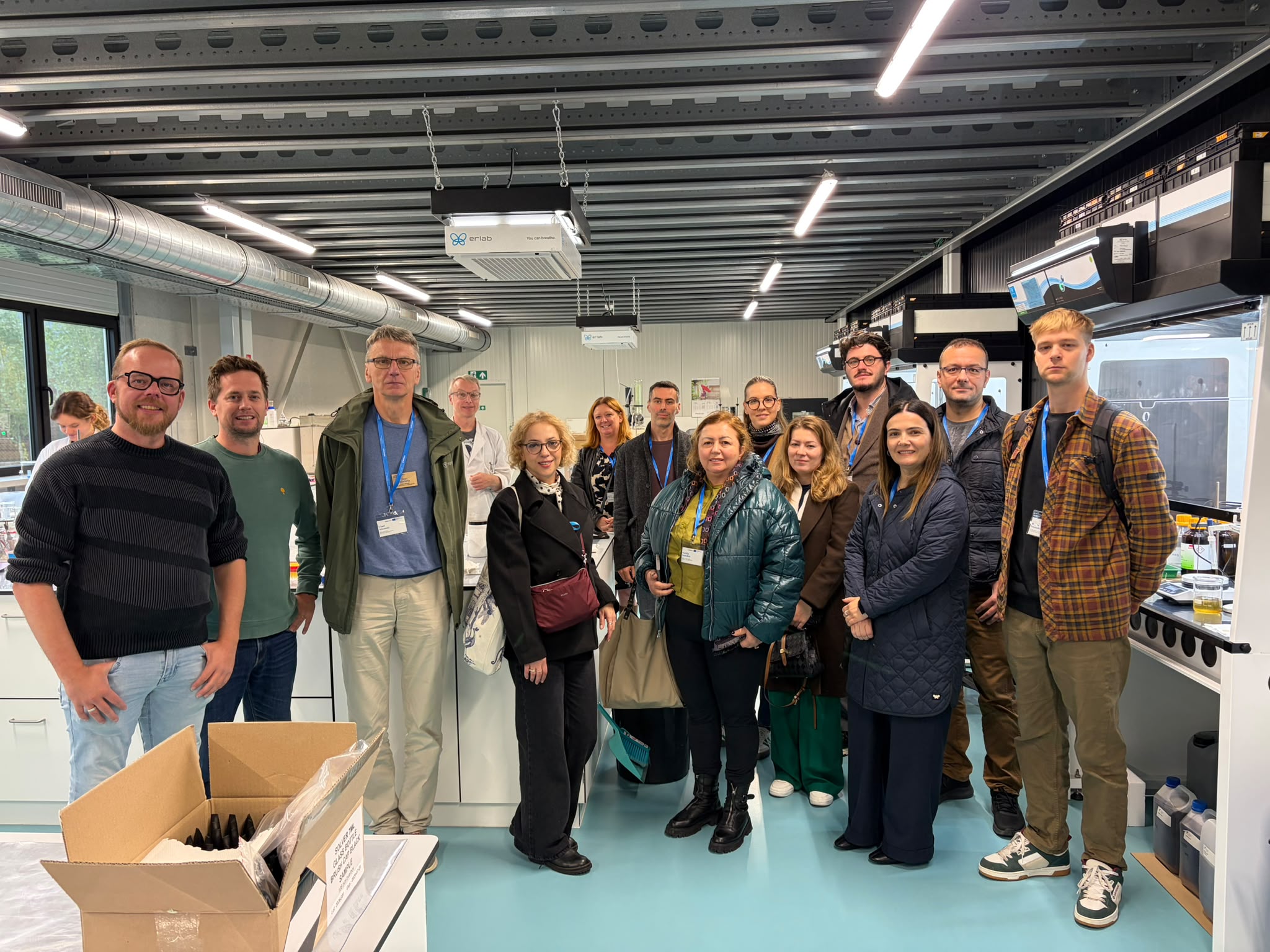
These examples were presented during the first Private Sector Engagement Roadshow, facilitated by the Interact programme and hosted by the Interreg France-Wallonie-Vlaanderen programme. The initiative brought together representatives from Interreg programmes, national authorities, innovation agencies and businesses to explore how cross-border cooperation can support innovation.
Turning shell waste into new ingredients
At Plinius Lab, cross-border cooperation is helping explore how materials that would otherwise be discarded can be used in new products.
The company is involved in two projects. Through GreenShield, supported by Interreg Flanders–Netherlands, it is working with Dutch company EGGXPERT to develop a functional ingredient for sun-care products from eggshell residues. In a separate project supported by Interreg France-Wallonie-Vlaanderen, Plinius Lab is working with French company Neo-Eco to convert shells from fisheries and aquaculture into calcium carbonate for use in cosmetics.
The two projects bring together different partners, materials and expertise to explore new uses for waste streams. As Plinius Lab explains, 'the most valuable innovation often happens where borders meet'.
Finding new ways to recycle mattresses
Mattresses are difficult to recycle, and finding ways to recover the materials they contain is an important challenge for the circular economy.
Through the Towards a Circular Mattress Industry project, supported by Interreg France-Wallonie-Vlaanderen, TripleR is working with French partners to develop approaches to mattress recycling. The project brings businesses together across the border to explore how materials from discarded mattresses can be recovered and reused.
The work illustrates how cooperation can help businesses address a shared environmental challenge that extends beyond national borders.

Developing technology for safer medical imaging
Cross-border cooperation also supports innovation in healthcare. Through the MNQC / CTQC project, Biomediqa is working with partners across the border to test technology for automated quality control in medical imaging.
The solution is designed to monitor the performance of medical equipment in real time. By automating parts of the quality-control process, the project aims to support diagnostic precision and patient safety.
It is an example of how businesses can work with partners in neighbouring regions to develop and test specialised technologies for use in healthcare.
What cross-border cooperation makes possible
The three examples show different ways in which Interreg can help businesses connect with partners beyond their national markets. Whether the focus is on reusing waste materials, developing circular approaches to manufacturing or testing new healthcare technology, cooperation creates opportunities to bring together expertise and resources from neighbouring regions.
As Marie Van Looveren, Head of Interreg France-Wallonie-Vlaanderen, puts it: 'Interreg helps companies in border regions look at each other instead of looking towards their capital cities. They turn from looking at their backs to looking face to face.'
By helping businesses find partners and work across borders, Interreg can support them in exploring ideas and developing solutions to shared challenges.
Sharing experience on private-sector engagement
Bringing businesses into Interreg cooperation also raises questions for the programmes themselves: how can they reach companies, address their specific needs and overcome practical barriers to participation?
These questions were also discussed during the roadshow, where programme representatives exchanged experiences on engaging the private sector. Interact has brought together approaches and lessons from across Interreg in its Private Sector Engagement Factsheet, which explores different ways of working with businesses, common challenges and practical solutions.
Header photo: Guilherme Johnston ©Interact