

Industrial transition: practical support tools for SMEs
Across Europe’s Atlantic regions, industrial transition depends in large part on how quickly smaller companies can adjust to new standards and market expectations.
Interreg cooperation projects are testing different ways to provide the needed support to companies to make the process easier. These projects are turning policy objectives into practical instruments that regional programmes can use.
Empowering SMEs in Bio-Based Innovation
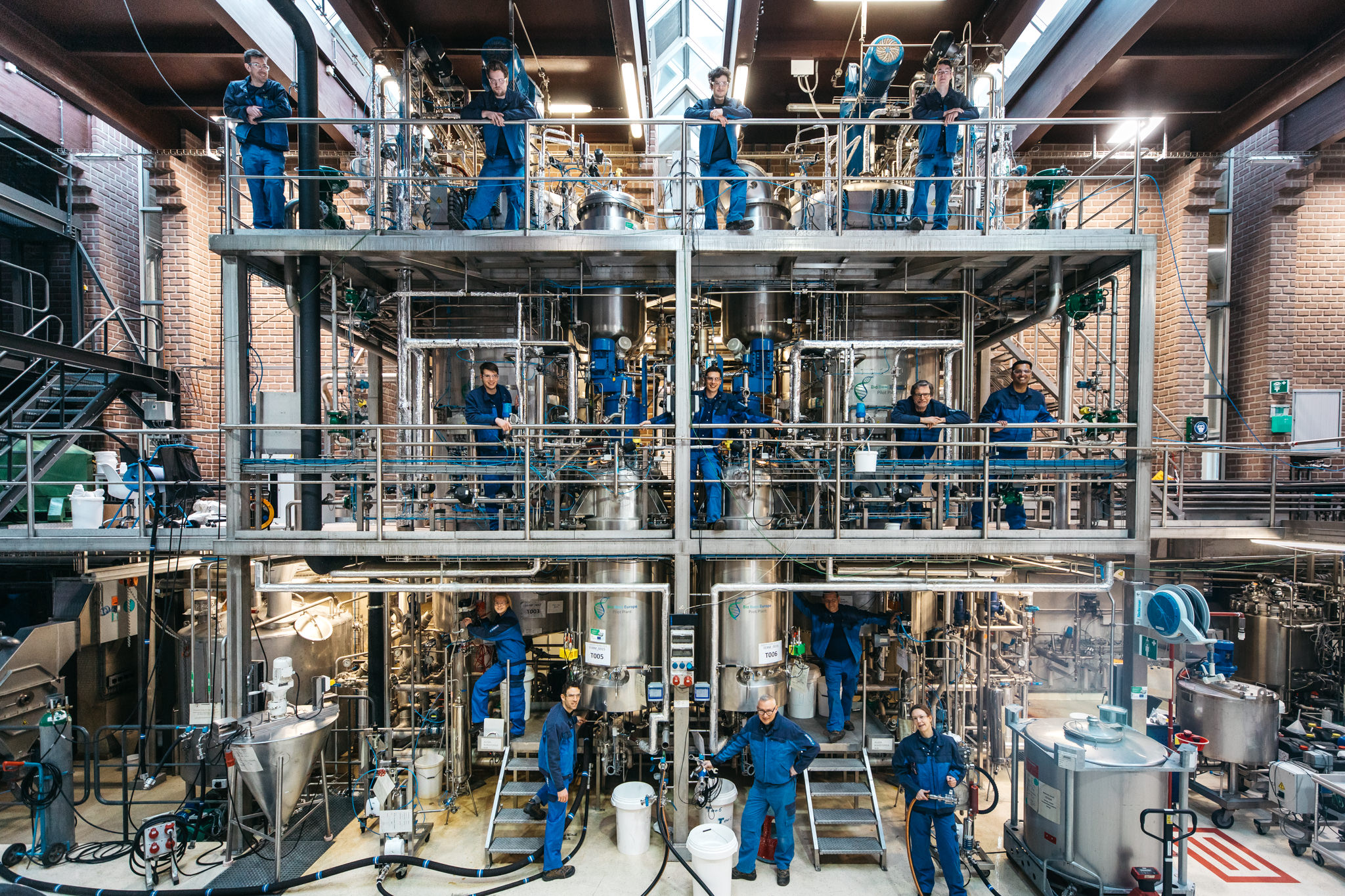
Bringing bio-based products to market often requires industrial-scale testing of innovative processes - a major hurdle for SMEs which lack awareness, or financial resources to access such facilities. The Interreg North-West Europe projects BioBase NWE and BioBase4SME addressed this challenge by expanding access to the Bio Base Europe pilot plant in Ghent (Belgium), enabling companies to test bio-based ingredients, chemicals and materials using state-of-the-art equipment.
The results were clear: 97 companies received innovation vouchers, with 63 supported through BioBase4SME. Over €1.5 million was invested in SME innovation services, and structured support reached more than 650 companies. The voucher scheme directly linked public funding to SME access, allowing scale-up and commercialisation of new bio-based products without requiring companies to invest in expensive in-house facilities.
This model demonstrates how targeted funding can bridge the gap between research and real-world application, offering a blueprint for regional programs to foster sustainable innovation.

Advancing sustainable construction: The FCRBE project
The construction sector in the EU is responsible for 35% of total waste production, as well as significant CO2 emissions and raw material consumption. To tackle these issues, the FCRBE project brought together 11 organisations with complementary expertise, all working towards a common goal: making material salvage and reuse a standard practice in construction.
Through 36 pilot operations and live tests, the project developed practical tools, such as directories of salvage dealers, technical documentation, and best practice guides, to support professionals in reusing building materials.Over five years, their efforts led to:
- Over 2 309 tons of materials recovered
- Over 321 tons of materials reused
The FCRBE project’s methods and tools are now being further disseminated through the PREUSE project, which focuses on addressing new reuse challenges in collaboration with local and regional authorities. The project’s approach has also gained traction beyond its original scope, with elements being explored or adopted in countries like Denmark, Slovenia, Ukraine, and Chile.
SME sustainability diagnostics and digital product passport readiness
Several Interreg POCTEFA projects focus on helping small companies prepare for sustainability and digitalisation requirements.
The GALOP project supports SMEs and start-ups in the Pyrenees through cooperation between chambers of commerce in Andorra, France, and Spain. The initiative includes a cross-border observatory mapping the sustainability challenges faced by companies, diagnostic tools to help firms identify priority areas for improvement, sustainability workshops and two GALOP Tours, benchmarking trips to learn about good cross-border practices.
The project also runs an accelerator programme supporting companies that want to integrate sustainability goals into their business strategies.
Another project, EDIT, focuses on preparing companies for the Digital Product Passport, a requirement expected under the upcoming Ecodesign for Sustainable Products Regulation.
The project developed a self-diagnosis tool that allows companies to assess their readiness for digital product passports. Pilot implementation is underway in two firms: ALGON, which produces metal furniture structures, and HARIVENASA, a manufacturer of oat-based food products.
Sector-specific methodologies developed through the project address three industries common to the cross-border region: textile, furniture and agro-food.
Supporting the next stage of investment
The tested solutions described in this series, including schemes to support SME innovation and compliance with changing regulatory requirements for sustainability and circularity, have been developed through transnational cooperation and are available for potential local and regional partners to leverage in any investments to be supported by regional programmes.
Header photo: Bricks salvaged from demolition sites are cleaned, sorted and palletised for reuse. In North-West Europe, hundreds of companies specialise in reclaiming building materials. ©Opalis.eu