

‘We’re already in the first minute of the next fire’: what Europe can learn from the Iberian megafires
When devastating wildfires swept across the Iberian Peninsula in August 2025, forestry expert Juan Picos saw something he had long feared become reality. In just 20 days, more than 500 000 hectares of forest and farmland burned. Thousands of people had to leave their homes behind. For Picos, professor of Forestry Engineering at the University of Vigo (Spain) it was not just another fire season.
‘I not only knew those places by name, but also by the people behind them.’
For years, Picos has been working on wildfire prevention across the Spain-Portugal border through projects like FIREPOCTEP and FIREPOCTEP+, funded by the Interreg Spain-Portugal Programme, helping communities, researchers and authorities prepare for increasingly extreme fires.
And despite everything he has seen, he still describes himself in simple terms: ‘A forester is always optimistic. We plant trees we may never see fully grown.’
When the fires started, he cancelled his holidays. From home, he followed the flames almost in real time, using satellite tools to map the fire perimeters and simulators to understand where they might spread next. At the same time, his forestry students and former students on the ground were sending him photos.
He stayed in touch with farmers and landowners he had been working with through the project, offering information, context and sometimes simply reassurance.
‘It was important to provide as accurate and calm information as we could because in cases like this, the closer you are, the less you can see.’
At the same time, he was constantly speaking to the media, helping explain what was happening and trying to prevent misinformation. And while the fires were still burning, something else became clear. Some of the tools and ideas developed through FIREPOCTEP were holding up even if, alone, they could not prevent the disaster.
‘I wish I had been wrong’
For years, Picos and his team had been mapping fuel loads and identifying strategic areas where preventive work would matter most. During the fires, they watched the flames move into exactly those places.
‘On one hand, there is the satisfaction of saying: I was right. On the other, I wish I had been wrong.’
Some of the project’s preventive work proved its value. In Alto Minho, Portugal, Portuguese forestry firefighters managed to defend Natura 2000 areas where FIREPOCTEP had already demonstrated preventive measures.This meant the ideas generated and tested during the project worked under real pressure.
Sadly, though, in one community in Monterrei, where forest owners had spent years managing their land carefully, the forest still burned. The fires were simply too big. That is one of the hardest things to explain to people who had done everything right.
‘The first thing they tell you is: you see? It made no difference. It burned anyway.’
It is, he says, like having the best parachute on a plane that crashes. The parachute is still the best one. But if the plane never gives you the chance to jump, it cannot save you. Despite all the preparation, the fire was bigger than what one person or one community could stop.
‘Today’s big fires become the parents of tomorrow’s big fires’
The emergency, in Picos' view, does not end when the flames are gone. Large fires leave behind risks that can shape the next one. Some people abandon the land because they no longer have the means or the strength to start again. Forests often grow back in a more uniform way, making future fires harder to control. And in the most damaged areas, the soil loses its ability to retain water, making drought worse.Together, these create the conditions for another crisis. ‘Today’s big fires become the parents of tomorrow’s big fires’.
‘We cannot waste time, because even if it sounds catastrophist, the next fire has already started. We’re already in the first minute of the next fire and it is in our hand to prevent the same situation from happening again’.
The first step is stabilisation: identifying the most damaged areas and preventing rain from carrying soil and ash into rivers and wetlands. Then comes restoration. But restoration does not always mean rebuilding exactly what was there before. Sometimes, Picos says, it is a chance to build something more resilient.

‘We are dealing with two huge energies: the atmosphere and the territory’
Fires in Galicia are far less frequent than they used to be, Picos says, with only about 10% as many in 2024 as in 1994. But the ones that do happen are now far larger.
In 2022, the region saw its first fires larger than 10 000 hectares. In 2025, there were fires above 30 000 hectares. Part of the reason is climate change. Another part is what experts call “fuel load”: the build-up of vegetation and combustible material in abandoned rural areas.
Fewer people living and working on the land means less day-to-day management and more vegetation accumulating over time. When extreme weather and accumulated fuel meet, the result can become impossible to control.
‘We are dealing with two huge energies: the atmosphere and the territory.’ And when they connect, he says, human capacity can be overwhelmed.
‘No trapeze artist puts the net in place while falling’
Cross-border cooperation, he argues, matters most in the time before a fire. FIREPOCTEP brings together partners from across the Spain-Portugal border, one of Europe’s biggest wildfire hotspots.
Over time, that cooperation has built relationships between researchers, local authorities, firefighters and communities. And when the fires came, those relationships activated immediately and in a natural way, as well-oiled personal connections usually do.
Partners shared data, exchanged expertise and helped each other understand what was happening. For Picos, it works like a trapeze artist’s safety net. ‘No trapeze artist puts the net in place while falling. The network needs to be there already'.
That, for him, is one of Interreg’s biggest strengths. Beyond project deliverables, it creates something less visible but equally important: trust. And trust moves fast in an emergency.

‘We are not fighting the fires of next year’
Wildfire prevention, Picos insists, is not about next summer but about the next decade. It means working on the landscape, supporting the people who still manage it, and preparing professionals for a new kind of fire reality. It also means staying the course.
‘We are not fighting the fires of next year. We are fighting the fires of the next decade’. Because what happened in Iberia in 2025 may not stay in Iberia. And if there is one thing these fires showed, it is that Europe cannot wait until the next emergency to prepare for it.
Picos knows the work is far from over. But when he looks back at those days, and ahead to what comes next, he holds on to one simple thought: ‘In some years, someone may ask me: when this happened, what were you doing?’
His answer is already clear: ‘I was there. I was trying'.
How Interreg POCTEP supports wildfire resilience across the Spain-Portugal border
Wildfires are one of the biggest shared challenges across the Spain-Portugal border. Through Interreg POCTEP, cooperation goes beyond emergency response, supporting prevention, preparedness and post-fire recovery.
Projects like FIREPOCTEP+, PAISACTIVO and REFLORESTA help communities reduce risks, restore damaged land and prepare for increasingly extreme fire seasons.
Six wildfire-related projects funded so far under POCTEP 2021–2027 with a total investment of more than €29 EUR and more than €22 EUR in ERDF support.
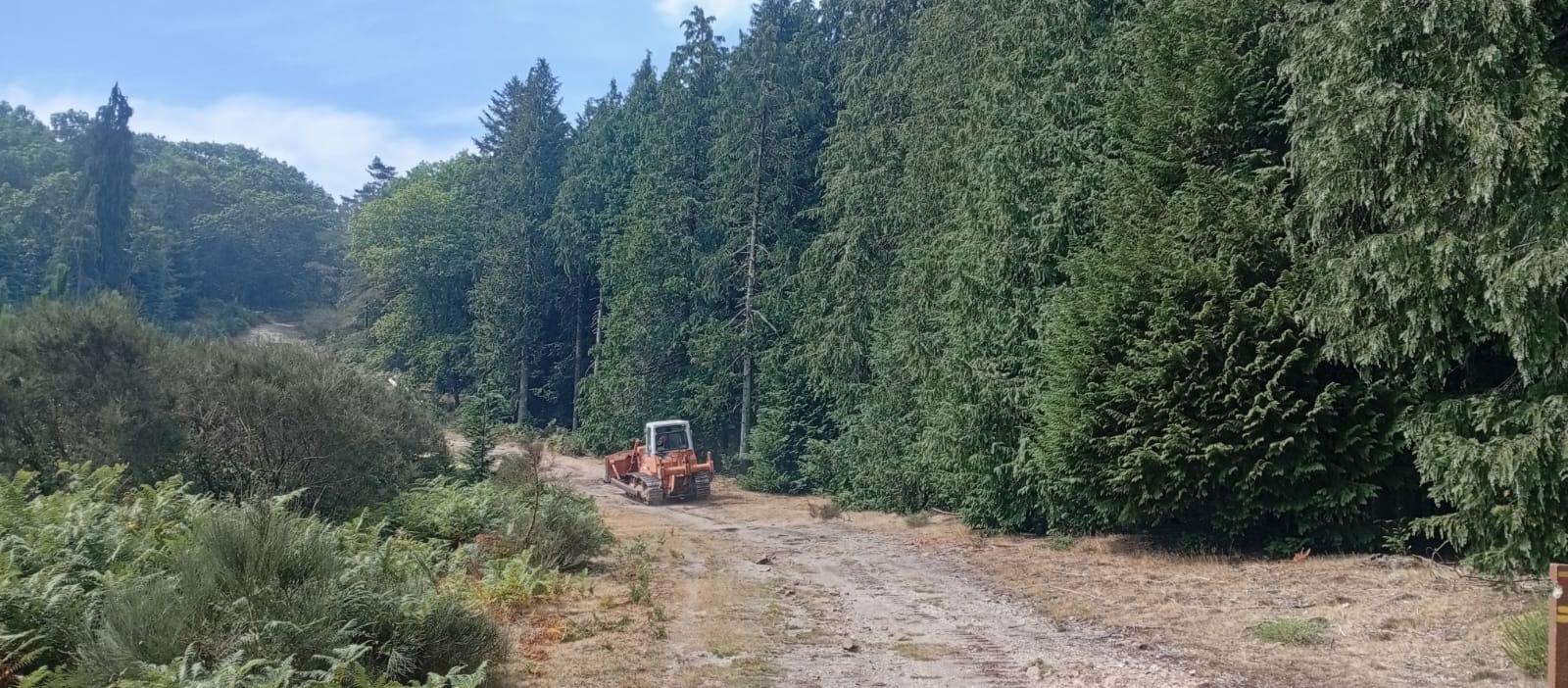
Header photo: FIREPOCTEP+ project, co-funded by the Interreg Spain-Portugal (POCTEP) Programme.