When countries need to act together, are their administrations ready?
Far to the south, a municipality faces a different challenge: making its local food system more sustainable while involving residents, businesses and public institutions in the decisions. The officials may know their own responsibilities, but they lack practical methods for bringing so many voices together.
These situations could hardly be more different. Both, however, raise the same question: do public authorities have the skills, knowledge and tools to work effectively with others?
Preparing for the unexpected in the North Atlantic
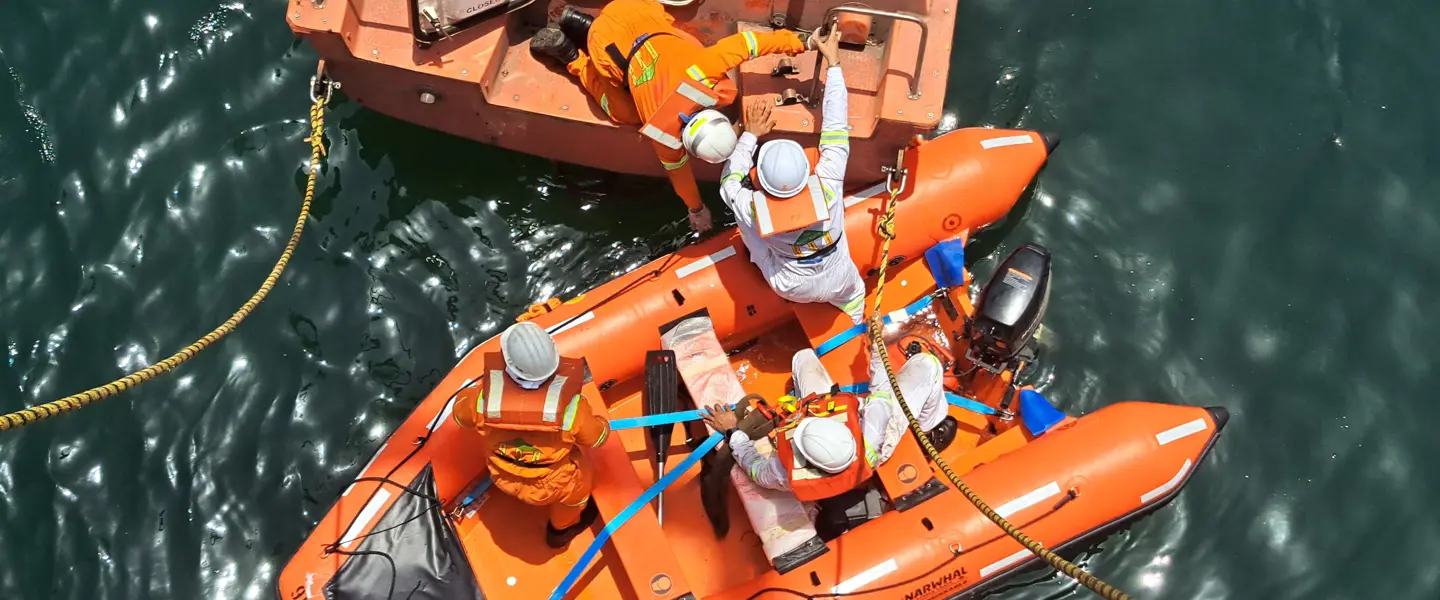
Across the Arctic and North Atlantic, long distances, severe conditions and limited rescue resources make major emergencies particularly challenging. An incident involving many people may require assistance from neighbouring countries, each with its own rescue services and procedures. NAMRO (Arctic and North Atlantic Mass Rescue Operation Guidelines), supported by Interreg Northern Periphery and Arctic programme, brought rescue coordination centres together to improve their effectiveness for such situations.
Led by Norway’s Joint Rescue Coordination Centre in Bodø, Norway, with partners from Iceland and Ireland and other rescue stakeholders involved, the project focused on making international coordination more effective.
Rescue Coordination Centres from different countries produced a guideline to harmonise preparedness for largescale maritime rescue operations. The guideline addresses questions that become critical when an emergency exceeds one country’s capacity: how coordination centres exchange information, how assistance is requested and received, and how organisations work together. Workshops also allowed participants to compare experience and identify difficulties across national systems. The result is a shared operational reference that maritime authorities can use in contingency planning, education, and training.
Learning to make decisions with communities
In the South Adriatic, municipalities in Italy, Albania and Montenegro have been exploring another kind of capacity: how to develop public policy with the people it affects. Local food policy can involve school meals, food waste, local producers, markets and social inclusion. Decisions may affect different departments and communities, and municipalities do not always have established ways to involve everyone concerned.
The SUrF (South Adriatic Urban Food Strategy) project, supported by Interreg IPA South Adriatic, brought together 4 municipalities and specialist partners to strengthen participatory approaches to urban food policy. In January 2025, seven municipal directors and policymakers took part in capacity-building training in southern Italy. Through study visits in Bari and Brindisi, they explored practical initiatives, including school meals, food-waste activities and farmers’ markets, and learned Living Labs: approaches that bring public authorities, businesses, researchers and residents together to identify problems and test solutions.
The partners also organised local activities and workshops to examine needs and possible responses. SUrF has developed a shared approach to urban food policy, drawing on the training and exchanges between the participating municipalities.
What administrations learn together
NAMRO and SUrF show that institutional capacity is not a single skill. In one region, it means preparing rescue authorities to coordinate an international response. In another, it means helping municipalities work with communities and develop policy more collaboratively.
In both cases, Interreg supports practical learning across administrative systems. The output may be a common operational guideline or a method that officials can apply in their own municipality. Either way, administrations are better equipped to tackle challenges that cannot be addressed effectively in isolation.
Header photo: Atmadeep Das on Pexels